
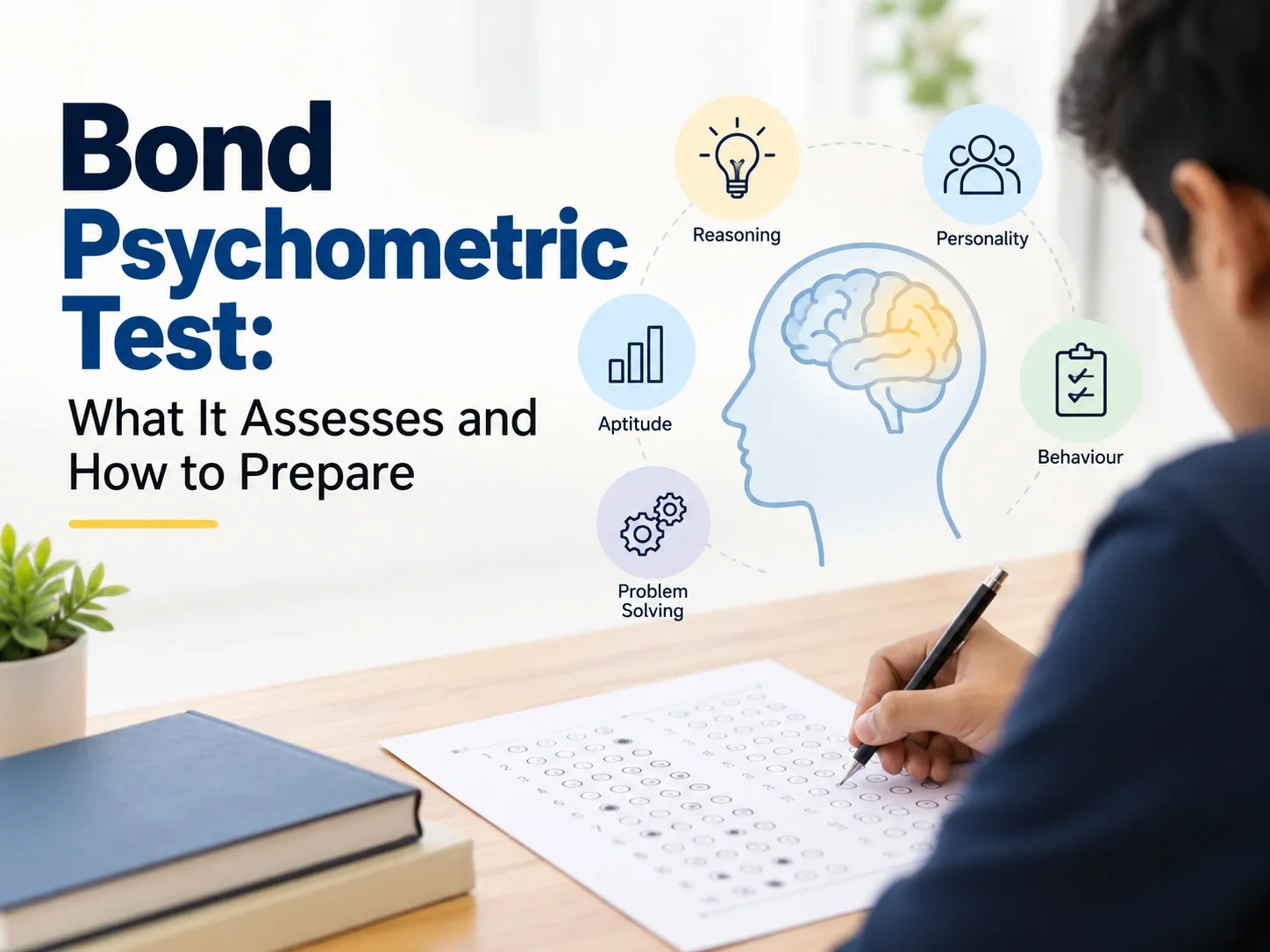
The Bond psychometric test is one of the key hurdles for anyone applying to the Bond University Medical Program. Unlike the UCAT, it does not test reasoning speed or problem solving. It looks at who you are: your personality, your values and how you are likely to behave as a medical student and future doctor.
Because it is so different from a normal exam, many strong applicants are unsure how to approach it. This guide explains where the Bond psychometric test fits, what it assesses, what the questions look like and how to prepare sensibly.
Where the Bond psychometric test fits in Bond Medicine selection
Bond selects medical students in stages. Applicants are first ranked on their academic results. Selected applicants are then invited to sit the psychometric test, and those who progress are invited to an interview. Moving from one stage to the next is by invitation only, so each stage matters.
Bond Medicine applications are made through QTAC. Full details, including current dates, are on the Bond University Medical Program website.
What does the Bond University psychometric test assess?
The Bond University psychometric test measures non-academic qualities. It is designed to give Bond a picture of your personality and behaviour, including how you handle pressure, how you work with others and how you respond to emotional situations. It is run online by an external provider on Bond's behalf.
There is no knowledge to memorise and no right answer to a single question in the usual sense. What matters is the overall profile that your answers build.
Bond psychometric test sample questions: what to expect
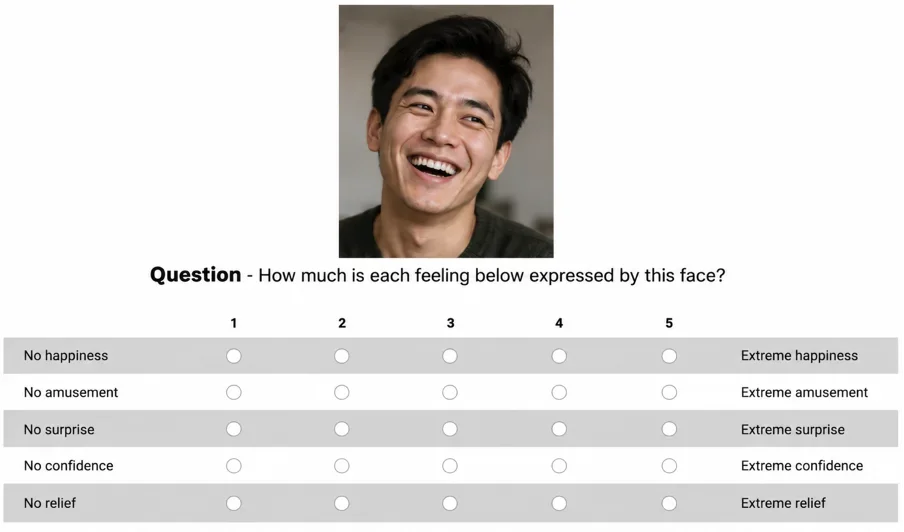
Personality questions typically ask how much you agree with a statement about yourself, or ask you to choose between two descriptions. Emotional intelligence questions may show a situation or a person's reaction and ask you to identify emotions or the most helpful response. The examples below are written by MedEssentials to show the style only. They are not real test questions.
"I stay calm when plans change at the last minute." Strongly disagree, disagree, neutral, agree, strongly agree.
"Which describes you better: I prefer to plan ahead, or I prefer to adapt as I go?"
"A friend is upset after a poor exam result. Which response is most likely to help them?"
Facial Expression Interpretation
Emotional Relevance
What mood(s) might be helpful for a teacher to feel when trying to determine why a normally high-performing student has suddenly begun missing assignments? The student has provided several explanations, while classmates and other teachers have offered conflicting information. The teacher needs to consider the details carefully before deciding how to respond. Rate on a scale of 1 – 5, with 5 being the most helpful.
Curiosity:
Neutral mood:
Anger:
Emotional Associations
Amelia had been preparing for an important university interview for several months. She believed the interview had gone reasonably well, although she was uncertain about several of her answers. Two weeks later, she received an email confirming that she had been offered a place. Amelia felt __
Relieved and elated
Resentful and disappointed
Embarrassed and ashamed
Suspicious and fearful
Indifferent and detached
Ranking Style Questions
Sophie had been working towards a promotion for more than a year and had recently received very positive feedback from her manager. She was therefore confident she would be selected. At the end of the week, she was told that the position had instead been given to a colleague with less experience. Sophie congratulated her colleague politely, but later found herself repeatedly thinking about the decision and questioning whether her efforts had been recognised.
Question:
Rank the emotions Sophie is most likely experiencing.
Ranked Answer Choices (1 = Most Relevant, 5 = Least Relevant):
Disappointed
Resentful
Frustrated
Envious
Elated
Emotional Stimulus
A university student was feeling nervous and shortly afterwards felt relieved. What most likely happened in between?
She received confirmation that she had passed an examination she thought she had failed
Her friend invited her to a concert that evening
Her lecturer criticised her assignment in front of the class
She realised she had forgotten to submit an important assessment
She discovered that another student had received a higher grade than her
Emotional Effectiveness
Sophie had spent several weeks preparing an important presentation for her team. During the meeting, her manager criticised several aspects of her work in front of her colleagues. Although some of the feedback was reasonable, Sophie felt embarrassed and upset by the way it was delivered. How effective would each action be in helping Sophie feel better?
Action 1: Sophie took some time to calm down and considered which parts of the feedback could help her improve her work.
Very ineffective
Somewhat ineffective
Neutral
Somewhat effective
Very effective
Abstract Associations
Imagine feeling anxious while waiting for the outcome of an important examination. You know the result could significantly affect your future plans, but there is nothing more you can do to influence the outcome. How much is the feeling of anxiety like each of the following sensations? (1–5), (1 = not alike, 5 = very much alike)
Cold:
Yellow:
Bitter:
Because the test contains many questions that look at similar traits from different angles, consistency across your answers is important. It is important to be coached on strategy so that the very first question you answer in the test will connect with the last.
How to prepare for the Bond psychometric test
Understand the qualities of a good doctor. Think about empathy, honesty, teamwork, resilience and responsibility, and what they look like in everyday situations.
Reflect on your own experiences. Consider times you worked in a team, handled conflict or supported someone. Knowing yourself makes it easier to answer honestly and consistently.
Get familiar with the format. Practising similar question styles reduces surprises on the day and helps you manage your time.
Answer honestly and consistently. Trying to guess the "ideal" answer to every question often produces an inconsistent profile.
Look after yourself on the day. Sit the test when you are rested, in a quiet space, without rushing.
Common mistakes in the Bond medicine test
Choosing extreme answers for everything to appear "perfect".
Answering similar questions differently because you are trying to guess what Bond wants.
Rushing through the test without reading each statement carefully.
Leaving preparation until the invitation arrives.
After the Bond psychometric test: the interview
If you progress, the next step is the Bond medical interview. Interviews focus on communication, motivation for medicine and how you think through real-world situations. Our Bond University medical interview training helps you practise with doctors who know the format.
Bond psychometric test FAQs
Is the Bond psychometric test similar to the UCAT?
No. The UCAT tests reasoning and problem solving. The Bond psychometric test looks at personality and non-academic qualities.
Can you fail the Bond psychometric test?
It is not a pass or fail exam in the usual sense, but your result is used to decide who is invited to interview. The number of candidates progressing to the interview remains a low percentage with anecdotal ranges between 30% - 50% depending on year.
Do I need to study for it?
Yes, many candidates have a misconception that this is a test where you can simply “be yourself”, which contradicts the purpose of testing and selection!
MedEssentials has over 12 years experience with the psychometric test, from its very first inception with an excellent track record of successful candidates.
Is there a fee to sit the test?
Yes, applicants pay a fee to sit the test. Check the current amount in your invitation or on Bond's website.
Can I retake the test in a later year?
Rules about re-sitting can change, so check Bond's current policy before you apply.
Where can I find Bond psychometric test sample questions?
Bond does not publish real test questions, but practising similar personality and emotional intelligence questions, like the examples above, helps you get used to the format.
Prepare for the Bond psychometric test with MedEssentials
MedEssentials is taught by doctors and high-achieving medical students who have been through medical selection themselves. Our Bond psychometric test preparation helps you understand the test, practise the format and build confidence before you sit it.
See what students say about us on Google, or contact us to find out more.
Written by:
Dr Brad Guo MBBS MMed
MedEssentials Principal
Senior Ophthalmology Surgical Registrar
Sydney Eye Hospital Network
Associate Clinical Lecturer